
Echols County Property Value Types
Three figures answer three different questions in Echols County. Fair market value is the assessor's estimate. Assessed value is separate. Georgia generally sets it at 40 percent of fair market value before exemptions and other adjustments. A recorded deed or PT-61 entry may show consideration from an actual transfer, though that amount reflects one transaction and may not equal open-market value.
| Value | What It Is | Where |
|---|---|---|
| Fair market value | Assessor's full-value goal for the digest | Tax Assessor |
| Assessed value | Generally 40 percent of fair market value | Tax Assessor |
| Taxable value | Assessment base after applicable adjustments | Digest or tax record |
| Sale consideration | Amount associated with a recorded transfer | Deed, PT-61, or index |
| Land and improvements | Separate components if the card displays them | Assessor parcel card |
That 40 percent ratio explains the gap. Assessed value sits below the assessor's fair market figure by design, not by discount. Nor should a buyer offer 40 percent of market value because of the ratio. Each number needs its own label and date.
Look Up Echols Property Value
The Echols County Tax Assessor links qPublic. A Cloudflare screen guards its live parcel and assessment app. Field labels, history controls, and value layout appear only inside the application itself, so trust the screen over any outside summary.
- Search the exact address, then a simplified road name if the portal supports it. Confirm the parcel ID and legal description.
- Record every displayed land, improvement, fair market, assessed, and taxable figure with its tax year or as-of date.
- Note exemptions or covenant status without assuming how they apply. Those affect the tax base, not physical market worth.
- Check the Clerk's deed index for a sale date and consideration clue. Treat it as a separate transaction fact.
- Fair market value
- The assessor's estimate of full value for digest purposes.
- Assessed value
- The statutory percentage applied to fair market value.
- Taxable value
- The base remaining after relevant adjustments or exemptions.
- Consideration
- The amount reported with a transfer, not always a market sale price.
How Echols Values Are Reviewed
Echols County reviews property each year. The main window runs January 1 through July 1. It covers construction, homestead applications, conservation and agricultural covenants, additions, remodeling, permits, taxpayer returns, deed changes, deletions, and owner requests. Pre-billed mobile homes run May 15 through October 31.
This schedule explains roll lag. A sale, new building, or changed use may have occurred without appearing on the currently published card. The county also notes that assessors do not visually inspect every parcel each year, so an unvisited tract proves nothing about whether a record is current or wrong.
Echols Assessment Method Clues
The Board of Tax Assessors weighs audits, sales data, and sales-to-assessment ratio studies when it considers updates or revaluations. That method is mass appraisal: many parcels valued at once for a uniform tax roll through common data. It is not a private appraisal.
Read land and improvement components in context. A large forest or farm tract may carry agricultural or conservation-use status, while a residential card may emphasize the home and outbuildings. Acreage, deed description, covenant status, and effective tax year are vital clues. Countywide housing statistics are background only. Statistics never replace a parcel appraisal.
Separate Echols Sale Consideration
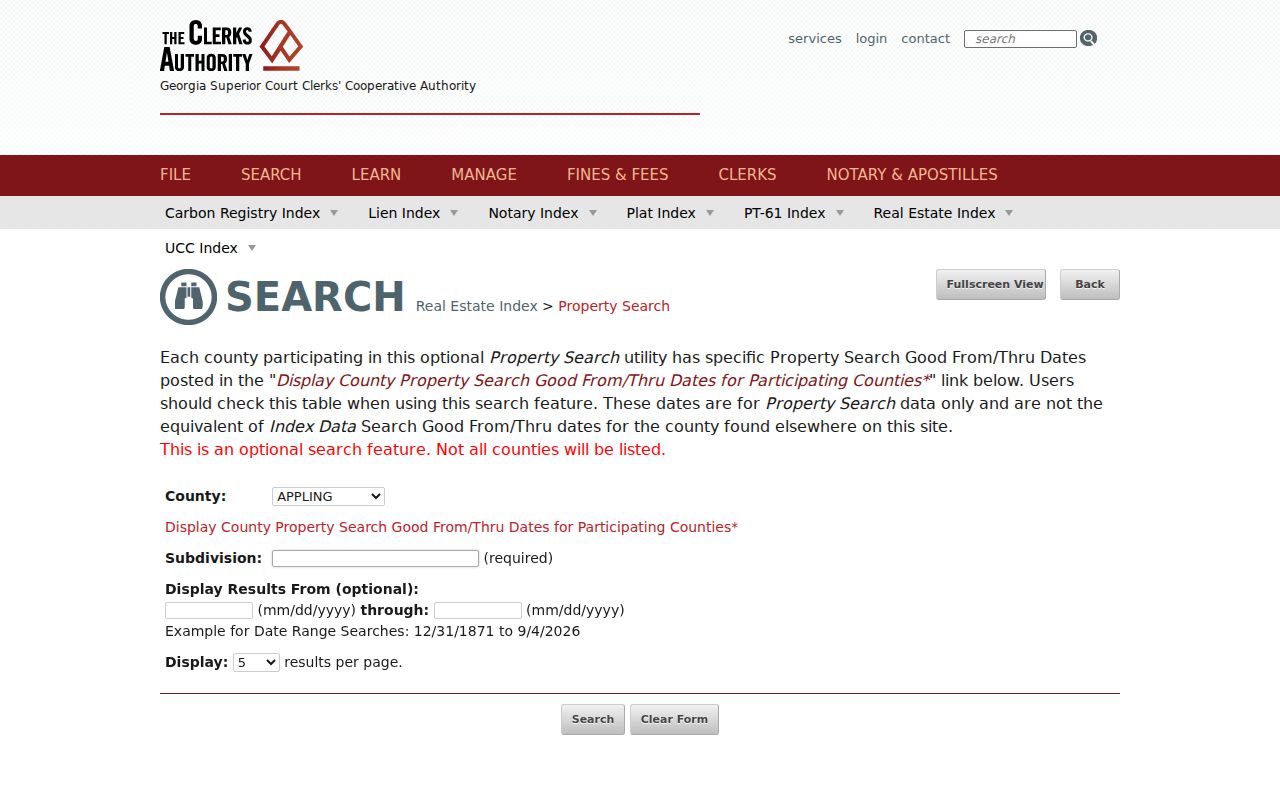
A deed-index amount can anchor a real transaction date. It may still reflect a family transfer, partial interest, bundled land, nominal consideration, or another nonstandard event. Read the instrument type and the deed image before calling an amount the sale price. The GSCCCA property search covers the recorded-property route.
Deed consideration can complement an assessor value. But any deed hit must match the same legal tract and the same date before it counts.
2025 Echols Appraisal Activity
Echols County posted a 2025 appraisal notice. The window ran June through December. It identified official appraisers by a white Ram truck, tag CTA 2683, and yellow vests, with questions directed to the Tax Assessor at 229-559-7370.
Those details belong to a dated notice. They describe no permanent county staff or vehicle. Check the current county notice before using them to authenticate a visit. A field review can inform the next roll, but it does not produce a buyer's private appraisal.
Note: Confirm any unexpected property visit through the county's current notice and published office number.
Value Is Not the Tax Bill
The Tax Commissioner receives the digest built through assessment, applies millage to the taxable base, and handles billing and collection. Bills generally mail by September 15. Payment is due November 15. Those dates are tax-bill mechanics under the county's published rules, not definitions of market worth.
Value questions and assessment questions go to different doors. Questions about a parcel's appraised or assessed figure go to the Tax Assessor at 110 Highway 94 E. Payment, due status, or a mailed bill belongs to the Tax Commissioner at 149 Highway 94 E. See Echols County property tax records for the bill and appeal process.
Date Every Echols Value
Date every figure before you trust it. A clean value worksheet carries a date beside each fact, from deed execution to Clerk recording to the assessor tax year to the Tax Commissioner bill year. Under county rule, the deed owner of record on Jan. 1 gets that year's tax bill, even if a buyer closes later in the year. So the billed name proves neither value nor ownership on later dates.
Store the parcel ID and legal description next to every number. A road address can change. A mailing address may only show where correspondence goes, not the land being valued. When two years differ, look for causes: construction, remodeling, deleted improvements, covenants, exemptions, and deed changes all shift the math.
Know which office produced each paper. The Board of Tax Assessors sets and reviews valuation, while the Tax Commissioner bills and collects after the digest runs. A millage notice gives rate-setting context, not one parcel's full value. Write the office, record type, and year beside every amount you keep.
When a qPublic card will not open, resist shortcuts. A county median or a nearby sale cannot stand in for the missing parcel figure. Instead, call the Assessor at 229-559-7370 with the address, the parcel number if you have it, and the tax year in question. Ask which public record lists the land, improvement, fair market, assessed, and taxable amounts, and whether an appeal or update is still pending.
Comparisons only work like-for-like. Two tracts on the same rural road can differ in acreage, timber, improvements, access, covenants, or the rights a deed conveys. A nearby recorded sale is context, never an automatic comparable. Before drawing any trend, confirm each amount reflects the same interest in land, a similar valuation date, and an arm's-length deal. If the record stays silent on those points, call the comparison incomplete. The Board's sales and ratio studies describe a countywide assessment process; they do not make one close-by sale proof of a parcel's worth.
Echols Assessor Value Limits
A value on the Echols County tax roll exists for uniform administration. It is not for market timing. It can trail a fast-moving market. It depends on the data the office holds. It will rarely match what one specific buyer would pay. A recorded sale from years earlier answers a different question entirely. An automated online estimate answers a different one still.
For a purchase, sale, estate, or loan decision, get a qualified appraisal matched to that purpose. Make sure it fits current conditions. Keep the assessor's number as evidence of the county's dated tax record. It is not a promise of what the land will fetch.
Value versus price. Echols County assessed value is not a guaranteed sale price or a private appraisal. Compare dates, sources, property rights, and physical condition.